





Car Battery Inverter Guide: How They Work, What Size You Need, and How to Connect For Portable Power
- Introduction
- How does a car battery inverter work?
- What size power inverter do I need for my car?
- Can I connect an inverter directly to a car battery?
- How long can a car battery power an inverter?
- Will an inverter drain my car battery when the engine is off?
- Can I use a car power inverter while driving?
- Why is my car battery inverter not turning on?
- What appliances can a 1000W car inverter run?
- Conclusion
- Call to Action
Introduction
Ever been on a road trip, camping off the grid, or stuck in a power outage, and desperately needed to plug in a laptop, small fridge, or power tool? A car battery inverter is the ultimate hack for portable power. It bridges the gap between your car's electrical components and standard household appliances.
Transforming your car into a mobile generator doesn't have to be complicated, but it does require a basic understanding of automotive electrical limits. Choosing the wrong size or connecting it improperly can lead to blown fuses, damaged electronics, or a dead battery.
This comprehensive guide will walk you through exactly how these devices function, how to size them correctly for your specific needs, and the safest ways to connect them so you can enjoy reliable power wherever the road takes you.
How does a car battery inverter work?
To understand how these units operate, you first need to understand the two main types of electrical current: Direct Current (DC) and Alternating Current (AC). A standard vehicle electrical system runs on 12-volt DC, where the electrical current flows in a single, constant direction. However, the standard outlets in your home—and the appliances designed to plug into them—require 120-volt AC, where the current rapidly reverses direction.
The primary job of the inverter is to act as a DC to AC power converter. It takes the 12V DC pulled from your battery and uses electronic circuits to rapidly switch the current's direction back and forth, simulating the alternating wave of AC power. Simultaneously, an internal transformer steps up the voltage from 12 volts to the 120 volts required by your household gadgets.
When shopping for a unit, you will generally encounter two different types of electrical waves produced during this conversion process:
- Pure sine wave inverter: Produces a clean, smooth electrical wave identical to the power from your home's wall outlet. This is essential for sensitive electronics like laptops, medical equipment (like CPAP machines), and modern televisions.
- Modified sine wave: Produces a blocky, "stair-step" electrical wave. These are generally cheaper and work perfectly fine for basic loads like simple motors, incandescent lights, or old-school heaters.
What size power inverter do I need for my car?
Sizing an inverter depends entirely on the total wattage of the devices you plan to run simultaneously, plus an additional 20% to 30% safety margin. If you try to pull 500 watts through a 300-watt inverter, the unit will overload and shut down.
When evaluating a 12V power inverter, you must pay attention to two different wattage ratings:
- Continuous Wattage: The amount of power the unit can safely output over a long, sustained period. This is the most important number to match against your device requirements.
- Peak (or Surge) Wattage: The short burst of maximum power the inverter can supply for just a few seconds. Appliances with electric motors or compressors (like refrigerators or power tools) often require two to three times their running wattage just to start up.
For instance, if you just want to charge a laptop (60W) and a phone (10W), a small 150W to 300W inverter is more than enough. However, if you want to operate a 700W microwave or a power drill, you should be looking at a 1000W to 1500W unit to safely handle the power draw.
Can I connect an inverter directly to a car battery?
Yes, and for larger power demands, connecting directly to the battery is an absolute requirement. While small inverters (usually under 300 watts) come with a plug designed to fit securely into your car's 12V cigarette lighter accessory port, that port is typically protected by a 15-amp or 20-amp fuse. Pulling more than 200 to 300 watts through the accessory port will blow the fuse instantly.
For larger units (typically 400W and above), you must connect the inverter directly to the car battery using heavy-duty, appropriately gauged cables. These larger cables reduce electrical resistance and prevent the wiring from overheating and catching fire when massive amounts of current are flowing.
Always ensure the engine is off and the keys are removed from the ignition when making your initial connections. Connect the red cable to the positive terminal of the battery first, followed by the black cable to the negative terminal or a solid metal chassis ground. Do not forget to install an inline fuse on the positive cable close to the battery to protect your vehicle from potential short circuits.
How long can a car battery power an inverter?
The duration your battery can run an inverter depends heavily on the battery's capacity, its state of health, and the total wattage of the appliances you are running. Keep in mind that standard automotive starting batteries are designed to provide quick, massive bursts of power to crank an engine; they are not designed for deep, prolonged discharging.
According to J.D. Power, a typical standard car battery has a capacity ranging between 40 and 65 ampere-hours (Ah). If you are pulling 10 amps (roughly a 120W device on AC), the battery theoretically holds a few hours of energy. However, drawing a starting battery down below 50% capacity can cause permanent sulfation and significantly shorten its lifespan.
Practically speaking, if you are running a medium load (like a laptop and a small fan) without the engine running, a standard car battery will be depleted to a non-starting voltage rather quickly. It is highly recommended to monitor the voltage closely or use a dedicated deep-cycle leisure battery if you plan on doing this frequently.
Will an inverter drain my car battery when the engine is off?
Absolutely. If the engine is turned off, your vehicle's alternator is not spinning, meaning no new electricity is being generated. During this time, the inverter relies 100% on the stored chemical energy in the lead-acid battery plates.
Even if you have absolutely nothing plugged into the AC outlets, simply leaving the inverter turned "on" will drain the battery due to something called "parasitic draw." The internal transformers and circuitry required to actively convert DC to AC consume a small amount of power just to stay awake—often between 0.5 and 1.5 amps continuously.
To avoid a dead battery and a stranded vehicle, automotive experts at Car and Driver note that a smaller power inverter with a low draw will deplete a battery to a non-starting state in just 30 to 60 minutes. Therefore, it is best to limit engine-off use to very brief periods or simply leave the vehicle running while powering appliances.
Can I use a car power inverter while driving?
Yes, using a car power inverter while driving is actually one of the safest and most efficient ways to utilize portable power. When your engine is running, your car's alternator continuously generates electricity, keeping the battery topped off while simultaneously feeding the inverter's demands.
This setup is perfect for family road trips where passengers want to charge multiple laptops, run a portable DVD player, or keep drinks cold in a small 120V travel cooler. Because the alternator is doing the heavy lifting, you don't have to worry about draining your battery and getting stranded at the next rest stop.
However, proper placement is critical when operating the unit on the move. Make sure the inverter is securely mounted and has plenty of open ventilation. These devices generate a significant amount of heat during the DC-to-AC conversion process. Wedging the unit tightly between seats or burying it under floor mats can block its cooling fans, leading to overheating and an automatic thermal shutdown.
Why is my car battery inverter not turning on?
If you flip the switch and your inverter refuses to power up, there are a few common culprits you should investigate before assuming the unit is broken:
- Blown Fuses: This is the most frequent issue. If plugged into the dashboard, check your car's accessory fuse box. If hardwired, inspect the inline fuse on the positive battery cable, as well as any internal blade fuses hidden inside the inverter itself.
- Low Voltage Disconnect (LVD): Most modern inverters feature a built-in safety mechanism that shuts the unit down if the input voltage drops too low (usually around 10.5V). This feature protects your battery from being drained to the point where it cannot start the car. Start your engine to recharge the battery and try again.
- Poor Connections: Loose battery terminals, corroded wire ends, or improper grounding can prevent sufficient current flow. Check that all nuts and bolts are tightened down and free of rust or acid buildup.
- Thermal Overload: If you were recently running a heavy load, the unit may have tripped a thermal safety switch. Give it 15 to 30 minutes to cool down, ensure the fans are unobstructed, and attempt to turn it back on.
What appliances can a 1000W car inverter run?
A 1000W continuous inverter provides a substantial amount of mobile electricity, making it highly versatile for most small to medium household devices. It can easily handle the combined wattage of several laptops, modern LED televisions, gaming consoles, CPAP machines, and small kitchen appliances like blenders or slow cookers.
You can also use it for light-duty contracting work. It will comfortably operate lower-draw power tools like small drills, orbital sanders, or battery chargers for cordless tool platforms.
However, a 1000W unit will not be sufficient for appliances that rely on resistive heating elements or massive starting surges. You cannot run standard hair dryers, large microwave ovens, pop-up toasters, or electric space heaters on a 1000W inverter, as these typically demand between 1500W and 2000W to operate safely. Always check the manufacturer's data tag on the back of your appliance to verify its specific wattage requirements.
Conclusion
A car battery inverter is an incredibly versatile accessory that essentially transforms your everyday vehicle into a rolling power station. By understanding the functional differences between a pure sine wave inverter and a modified sine wave model, you can safely power everything from sensitive medical devices to rugged power tools while out on the road.
Remember that proper sizing, secure installation, and vigilant battery management are crucial to a successful setup. Whether you are using a simple plug-in unit for your laptop or directly wiring a heavy-duty system to your vehicle electrical system, always monitor your energy consumption to ensure you don't inadvertently drain your starting battery.
Equipped with the right knowledge and the correct size inverter, you will never have to worry about being caught without vital electrical power during your next camping trip, cross-country drive, or unexpected emergency outage.
Call to Action
If you need help selecting the perfect power setup or want professional installation for your vehicle, contact our team today for a customized consultation!


Modified Sine Wave Inverters
How many devices can it power at the same time?
Dual universal sockets + two USB ports can power multiple devices (such as two home appliances + two mobile phones) at the same time, as long as the total power does not exceed 600W.
Can other input voltages be customized?
Yes, the regular is DC12V, and DC24V, etc. can be customized. Please consult customer service for details.
What devices can be powered by this inverter?
Suitable for TVs, fans, computers, and small tools.
How to install the battery terminal wire?
Connect the red terminal wire to the positive pole of the battery and the black terminal wire to the negative pole. Ensure the interface is firm and there is no short circuit when connecting.
Pure Sine Wave Inverters
Can it run inductive loads like fridges or tools?
Yes, pure sine wave output supports all load types.
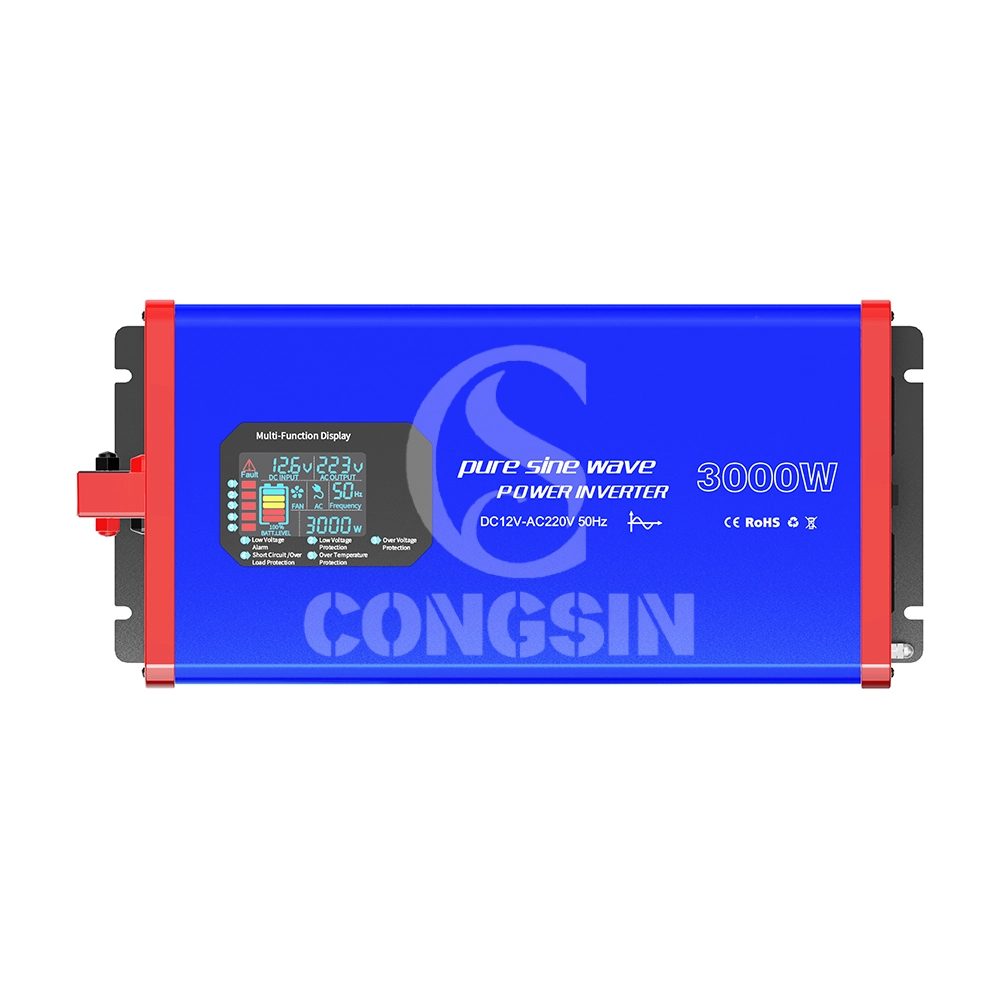
This 3000W full-power pure sine wave inverter (Model: CS3000PSW) adopts pure sine wave output technology (waveform distortion rate <2%), and the output power is highly consistent with mains power quality. It can safely drive high-power precision loads such as air conditioners, refrigerators, medical instruments, and small industrial equipment, avoiding equipment malfunctions or shortened service life caused by unstable waveforms. The device supports DC 12V input (compatible with 10.5V-14.8V wide voltage), continuously outputs 3000W full power, and has a peak power of 6000W, easily coping with the instantaneous startup impact of high-power devices; it is equipped with 4 AC universal sockets (max current 16A) + 2 USB 3.0 fast-charging ports (22.5W per port) to meet the simultaneous power supply needs of multiple devices. Built-in six-fold safety protection (overload, overvoltage, undervoltage, short circuit, overtemperature, reverse connection), combined with dual intelligent silent cooling fans (noise ≤45dB), it achieves the triple advantages of "high power + high safety + low noise," suitable for home emergency, outdoor engineering, vehicle-mounted power supply, small industrial scenarios and other fields.
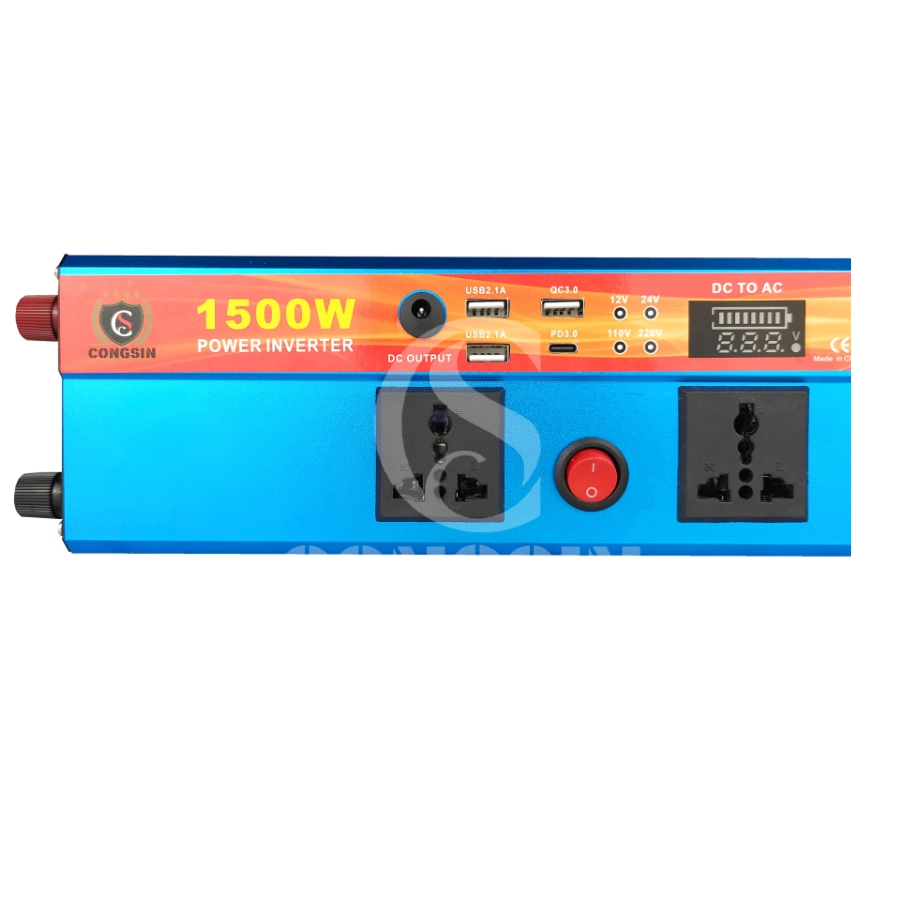
Our CS1000DDBC 1000W modified sine wave inverter is a professional power conversion device that converts DC 12V from batteries into AC 220V electricity. It is designed with user convenience in mind, featuring an LED display for real-time status monitoring, multiple charging ports (3 USB, 1 Type-C, 1 DC 12V) and two universal sockets to power a wide range of devices simultaneously. Its compact size (250×95×55mm) and lightweight design (NW: 0.84kg) make it easy to carry, ideal for outdoor activities, emergency home use, and on-the-go power needs.
Get in Touch with Our Team
You can also communicate with us directly through our online contact form. Please fill in the following information, and our team will contact you as soon as possible after receiving your message.

CONGSIN is a trusted OEM factory for power inverters, solar charge controllers, and DC converters. Reliable solutions for global B2B buyers.
 High Quality
 7/24 Service
 Guaranteed Warranty
© 2025 Congsin. All Rights Reserved.